Industrial Machine Repair Quality: OEM Discounts & Reliability
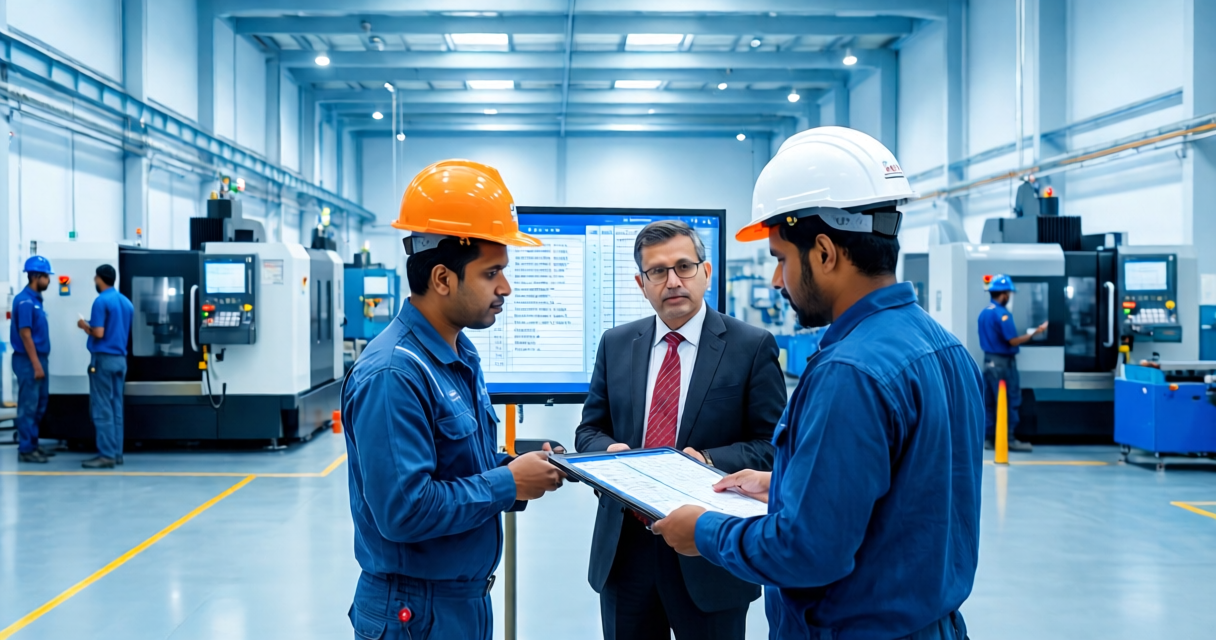
Don't let proprietary OEM pricing dictate your OPEX. Discover how certified third-party vetting provides superior quality without the massive cost premium, ensuring downtime reduction to under 4 hours with MachineryFix.

MachineryFix Team
Industrial Repair & Maintenance Experts · 3 July 2026
Need this fixed?
Certified technicians, dispatched from our Hyderabad hub.
Downtime in India does not just mean lost production; it translates to immediate revenue losses ranging from ₹50,000 to over ₹5 lakh per hour. For MSME factories operating on razor-thin margins—whether a processing unit in Ambattur Chennai or a textiles plant near VNR Textiles—unplanned machine failure represents an existential threat. The search for truly cost effective industrial machinery repair solutions demands more than merely finding a local mechanic; it requires verifiable quality assurance, guaranteed speed, and absolute operational certainty.
The pressure on Plant Managers to balance immediate operational expenditure (OPEX) with sustained uptime is immense. This critical decision frequently traps factory owners between two damaging choices: accepting the prohibitively expensive proprietary service contracts from Original Equipment Manufacturers (OEMs), or risking cheaper, unverified third-party fixes that fail within weeks, leading to cyclical downtime and escalating costs. Eliminating this constant uncertainty requires structured, digital transparency built into every step of the repair process.
The Cost of Confusion: Why Machine Repair Qualification Matters
When a critical machine breaks down—for instance, the main hydraulic press line in an industrial cluster like GIDC Vapi—the clock starts ticking against profitability. Every minute lost due to inaccurate diagnosis or substandard replacement parts directly erodes cash flow. Many MSME factories still rely on word-of-mouth recommendations or general electricians who lack specialized mechanical expertise, resulting only in temporary fixes rather than lasting solutions. This inherent reliance constitutes the fundamental cost of confusion.
Industrial machinery operates under extreme stress: voltage fluctuations common in Tier-2 cities, high heat, dust ingress, and continuous cycles of torque and pressure. A repair that appears functional on the surface—a patched gear or a bolted sensor—can fail catastrophically when subjected to real industrial loads. The solution involves more than just locating an expert *near* the factory; it necessitates finding one who provides a certified, diagnostic approach rooted in mechanical engineering principles.
Consider a scenario within the Ludhiana cluster where a CNC machine seized unexpectedly. An unqualified technician might simply replace the belt, overlooking the underlying issue with the motor bearing—a problem that would have cost thousands to diagnose properly but was missed due to time constraints and pressure. Therefore, relying on a structured network is non-negotiable. The Vetted Technician Network ensures that every expert undergoes rigorous skill evaluation and identity verification via Aadhaar checks, guaranteeing competence before they ever set foot inside the facility gate.
Furthermore, modern factory compliance mandates transparency in repair history. Simply accepting a verbal assurance of quality is insufficient for ISO audits or internal management reviews. A proper service log must meticulously detail: - The exact symptoms observed upon arrival. - The root cause identified through professional diagnostics. - The specific OEM-grade parts used, including serial numbers. - The final operational test results and sign-off.
By empowering factory owners to compare proposals from multiple, 100% verified experts using the platform at machineryfix.com, the process transforms a high-stakes guessing game into an informed, competitive bidding environment. This system ensures that quality standards are matched with genuine cost efficiency, fundamentally solving the persistent problem of repair uncertainty in Indian industry.
OEM vs. Certified Third-Party: A Data-Driven Comparison (Beyond the Discount)
The debate between proprietary OEM services and independent third-party repairs often centers on a single factor: initial cost. Manufacturers naturally position their exclusive service models as the only guaranteed path to reliability. While they offer peace of mind, this assurance carries an often prohibitive premium—a cost that frequently forces MSMEs to divert precious capital away from growth and reinvestment into core operations.
A savvy Plant Manager must look beyond the initial quoted price point. The true measure is assessing the Total Cost of Ownership (TCO): 1. The high repair bill itself. 2. The cost incurred during downtime, which can easily eclipse the entire original repair bill. 3. The potential for repeated failures resulting from substandard parts or incomplete diagnostics.
A certified, competitive third-party network excels in this comparison. These independent experts are not mere substitutes; they function as highly skilled specialists who employ standardized, diagnostic methodologies to pinpoint the true root cause, regardless of the equipment's manufacturer. By accessing this deep pool of talent and comparing bids—a key feature that manages competitive bidding—factory owners secure high-quality service without being locked into a single, expensive vendor.
For example, when addressing hydraulic press repairs in an industrial zone, an independent expert using modern diagnostic tools can isolate a faulty manifold seal, recommending the necessary OEM part, but offering the labor and diagnosis at a significantly reduced rate compared to proprietary contracts. This approach does not compromise quality; it optimizes expenditure. The objective is achieving *equivalent* guaranteed performance at a substantially optimized price point—a true value proposition beyond simply seeking an "OEM discount."
We understand that local industrial needs vary dramatically across India. Factory owners can book a certified technician directly from their phone, receiving upfront pricing before any work commences, ensuring they maintain absolute control over both budget and quality standards. The platform maintains an impressive 4.8/5 average rating because it focuses relentlessly on delivering measurable value: speed, transparency, and cost control—simultaneously addressing the needs of industries from textile to packaging machinery.
How Advanced Diagnostics Mitigate Risk: Beyond Visual Inspection
In industrial maintenance, a "visual inspection" represents only the bare minimum; it identifies what is broken *now*, but provides no insight into why or if failure will recur. True risk mitigation requires advanced diagnostics—the scientific process of determining the root cause rather than simply treating visible symptoms. This technical skill level clearly separates reliable modern service providers from general mechanics.
Advanced diagnostic capabilities are essential for complex machinery, ranging from conveyor systems to delicate packaging lines. A simple blockage might be obvious, but a failing electrical component due to localized overheating or an incorrectly calibrated sensor reading requires specialized equipment and expertise far exceeding what the average local repairman possesses.
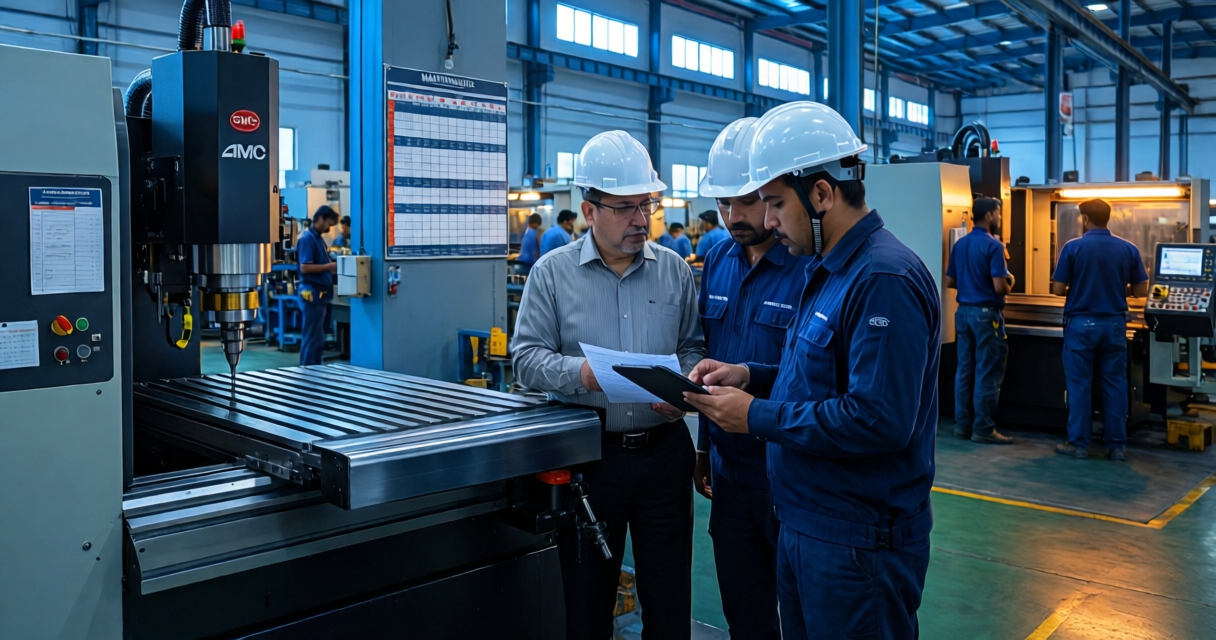
When utilizing MachineryFix's Intelligent Dispatch Engine, the factory owner gains access not just to a technician, but to a comprehensive diagnostic resource. The initial consultation phase (Step 1 of our process) mandates detailed input—error codes, machine make, specific symptoms—allowing the system to match the breakdown profile with experts who specialize in that exact failure mode. This preemptive matching capability drastically reduces diagnosis time and ensures the first expert on site possesses the correct technical knowledge base from the outset.
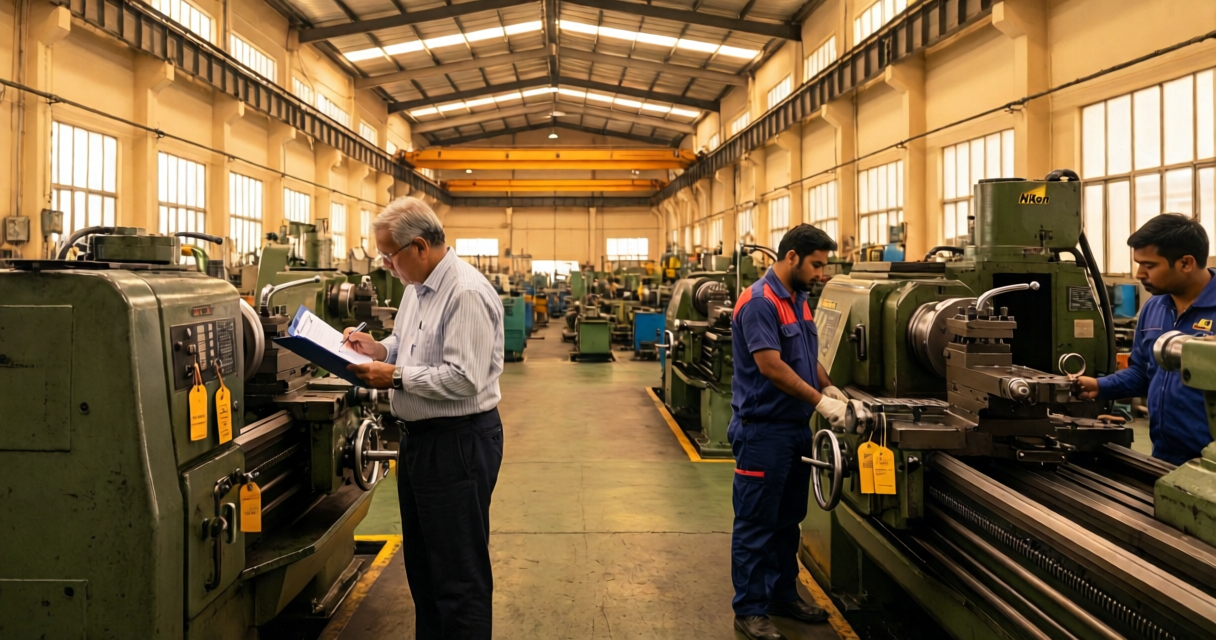
Consider a recurring bearing failure on a lathe machine. A visual check confirms damaged bearings, but advanced diagnostics will investigate misaligned shafts, uneven load distribution, or improper lubrication cycles—the *actual* systemic cause. By diagnosing these underlying issues and documenting them in the Digital Service Catalogues, the owner builds an unassailable record of preventative action. This systematic approach ensures that the investment fixes not just a part, but the entire operational process itself.
This deep technical rigor allows for rapid response times—often under 4 hours—because it minimizes diagnostic guesswork and maximizes targeted repair efficiency. The ability to instantly compare bids from multiple experts who have all followed this rigorous diagnostic protocol guarantees receiving the most accurate, cost-effective solution available in any industrial cluster, whether situated in Uppal or MIDC Pune.
The Digital Solution: Achieving Transparency with Competitive Bidding and Service Logging
Historically, mechanical repair work operated under a veil of uncertainty. Factory owners often handed over the machine, signed vague job cards, and waited for the "good news" (and the final bill). This lack of process transparency created massive opportunities for inflated costs or hidden charges. Today's modern MSME factory owner requires verifiable data, proof, and accountability—all achievable through digital transformation.
The single most powerful feature addressing this pain point is the competitive bidding mechanism paired with granular service logging. Instead of accepting a single quote, the client receives multiple proposals instantly from certified experts matched by the Intelligent Dispatch Engine. This capability allows them to: - Compare labor costs side-by-side across different vendor bids. - Compare estimated times of arrival (ETAs) for immediate planning. - Compare proposed parts lists and their associated warranties before commitment.
This immediate comparison not only saves money but also functions as a quality check; if multiple, highly rated experts arrive at the same problem and propose vastly different solutions without clear technical justification, it serves as an immediate signal that caution is needed.
Furthermore, the Digital Service Catalogues revolutionize compliance and operational history management. Every job completed generates a perfect digital log: - Photo documentation of the damage *before* repair commenced. - Digital signing by both factory representative and technician upon completion. - A full accounting of all parts used (critical for inventory reconciliation and tax purposes).
This level of meticulous record-keeping is invaluable, especially when preparing for external audits or internal management reviews. It provides an undeniable audit trail that proves due diligence was performed, protecting the company legally and operationally across diverse industrial sectors.
For instance, a facility manager in Jeedimetla Cluster cited how the digital service logs streamlined their ISO audit preparation—a clear testament to the platform’s ability to transform chaotic paper records into structured, accessible data points for decision-making. This shift from reactive crisis management to proactive, transparent system maintenance represents the core promise of modern industrial repair services across India.
From Reactive Repair to Predictive Uptime: Structuring Your AMC Strategy
The ultimate operational goal for any plant manager is not merely minimizing downtime; it is eliminating unplanned downtime altogether. Transitioning from a purely *reactive* (fixing what broke) to a *predictive* (fixing what will break) maintenance model marks the key differentiator between surviving and thriving in India's competitive industrial landscape. This shift necessitates structured investment, which is precisely where Predictive Maintenance AMC becomes critical.
A well-structured Annual Maintenance Contract (AMC), supported by the platform, functions as more than an insurance policy; it constitutes a strategic operational partnership built on predictive data. Instead of waiting for the conveyor belt motor to burn out—an emergency that triggers premium pricing and chaos—the Predictive Maintenance AMC establishes regular diagnostic cycles.
The process unfolds systematically: 1. Baseline Establishment: The initial months involve deep diagnostics across all critical machinery (CNC, Lathe, Hydraulic Press). 2. Risk Modeling: The platform helps identify components with the highest probability of failure within a given timeframe based on operational hours and wear patterns specific to the factory's environment. 3. Scheduled Intervention: Instead of waiting for an error code E-404, the AMC triggers a scheduled inspection every 90 days to check oil pressure, bearing vibration, or electrical grounding proactively.
This structured approach drastically lowers OPEX by converting high-cost, unpredictable emergency spending into manageable, predictable capital expenditure (CAPEX). The system ensures that necessary parts are ordered and technicians are scheduled *before* the failure occurs. This minimizes resource strain on the internal team and guarantees consistent machine performance throughout the year, regardless of monsoon humidity or power quality issues.
The collective experience provided by our Vetted Technician Network, which maintains a 4.8/5 average rating, makes this predictive model highly trustworthy. When committing to an AMC, the client gains access to the entire digital ecosystem—the Intelligent Dispatch Engine for immediate scheduling adjustments, and competitive bidding options even within scheduled maintenance tasks. This guarantees maximum reliability without compromising budget control or operational autonomy.
Why MachineryFix Is India's Fastest Repair Network
In industrial repair, time is not a commodity; it is measured directly in lost profit. Traditional service models fail because they are geographically restricted, lack standardized vetting protocols, or force factory owners to navigate complex vendor selection processes while the machine sits idle. These systemic inefficiencies can cost lakhs per hour of operation.
MachineryFix Technologies Pvt Ltd engineered an entirely digital solution designed specifically for the complexity and urgency faced by MSME factories across India's major industrial clusters (from Hyderabad’s Uppal Industrial Area to Pune’s MIDC). Our platform is built on four pillars of unmatched efficiency:
1. Intelligent Dispatch Engine: We do not rely on phone calls; we use an algorithm that matches the exact breakdown profile with the nearest certified expert in minutes, guaranteeing a rapid response—often under 4 hours, 24/7. 2. Vetted Expertise: Our technicians undergo mandatory Aadhaar checks and rigorous skill evaluations, ensuring every service visit is handled by a professional who is both competent and trustworthy. 3. Transparency & Control: Through competitive bidding and the Digital Service Catalogue, control over cost and quality remains with the client, eliminating vendor lock-in risk. 4. Pan-India Reach: Whether dealing with packaging machines in Ambattur or textile machinery in Coimbatore, our network provides reliable, localized support backed by consistent national standards.
We have successfully helped factories reduce average downtime from days to under 4 hours. We deliver guaranteed quality, unparalleled speed, and the financial control that modern Indian industry demands today.
Do not allow machine breakdowns to dictate your profitability or operational schedule. Take immediate control of your operational expenditure and guarantee uptime with India's leading on-demand industrial repair platform. To experience this difference in speed and transparency, visit machineryfix.com immediately, or call us at +91 63030 48885 to book your first inspection via Book a Technician.
Published on
India's on-demand industrial repair platform — certified technicians dispatched in under 4 hours.
Frequently Asked Questions
How quickly can I get a technician for cost effective industrial machinery repair in India?
MachineryFix's Intelligent Dispatch Engine matches your breakdown with the nearest verified technician in minutes. Average on-site response time is under 4 hours across Pan-India. Book at machineryfix.com or WhatsApp +91 63030 48885.
Are MachineryFix technicians verified and background-checked?
Yes. Every technician on MachineryFix passes Aadhaar-based identity verification plus rigorous skill evaluation before being onboarded. This is why MachineryFix maintains a 4.8/5 average rating from factory clients across India.
What is a Predictive Maintenance AMC and how does it work?
A Predictive Maintenance AMC (Annual Maintenance Contract) from MachineryFix covers scheduled inspections, condition monitoring, and priority emergency response. It reduces unplanned breakdowns by 40-60% and is ideal for factories running critical CNC, hydraulic, or textile machines.
How much does industrial machine repair cost in India?
Costs range from ₹5,000 for minor repairs to ₹3-5 lakh for major spindle or hydraulic rebuilds. MachineryFix uses competitive bidding — you receive upfront proposals from multiple local experts before committing, so you always get a fair price.
What documentation does MachineryFix provide after a repair?
MachineryFix generates a Digital Service Catalogue entry for every job — logging the fault, diagnosis, parts replaced, technician ID, and timestamps. This digital job card is accepted for ISO 9001 and GMP compliance audits.
Can I rehire the same technician for future jobs or an AMC?
Yes. MachineryFix's re-hiring feature lets you save a preferred technician directly to your account. You can rebook them for follow-up work, recurring maintenance, or a full AMC contract — keeping your factory history consistent.
Need a certified technician?
Get one dispatched in under 4 hours.