Ludhiana Loom Maintenance: Uptime Solutions for Punjab Textiles
Stop losing lakhs hourly to reactive breakdowns. Shift to predictive care and guarantee uptime with MachineryFix's sub-4 hour response time.

MachineryFix Team
Industrial Repair & Maintenance Experts · 5 July 2026
Need this fixed?
Certified technicians, dispatched from our Hyderabad hub.
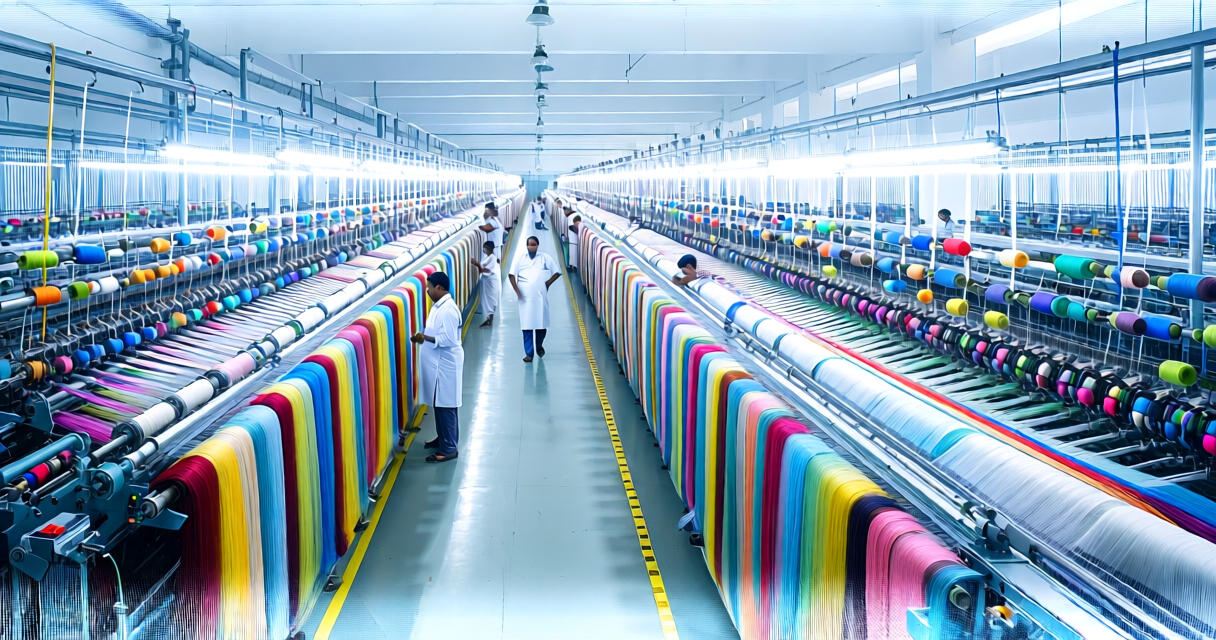
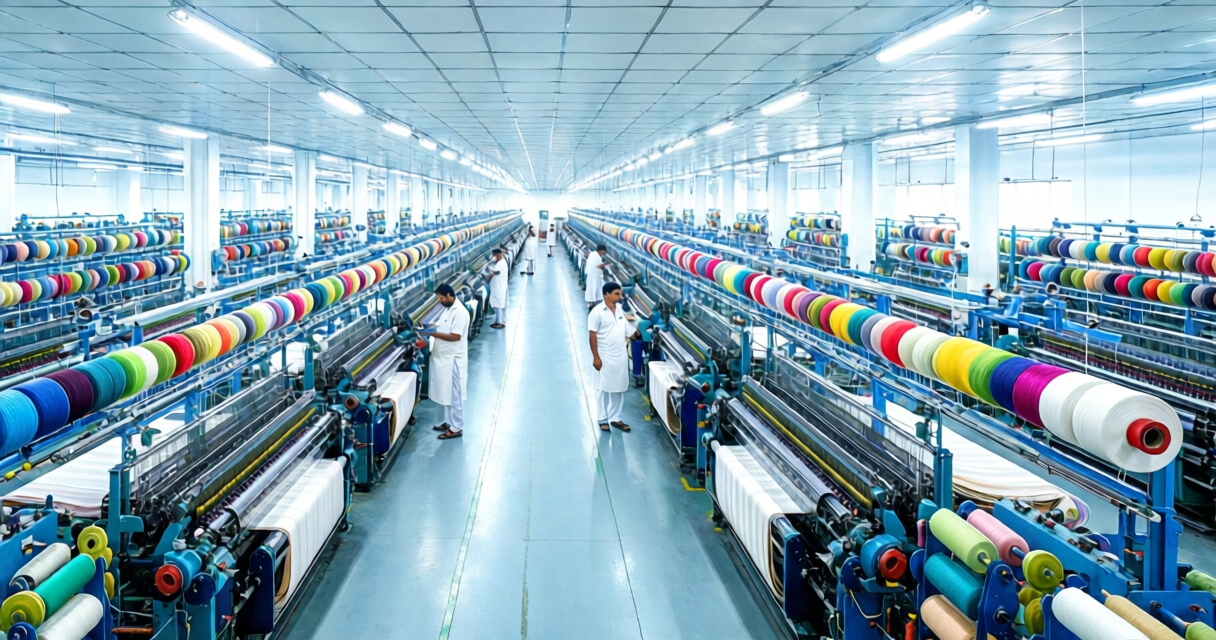
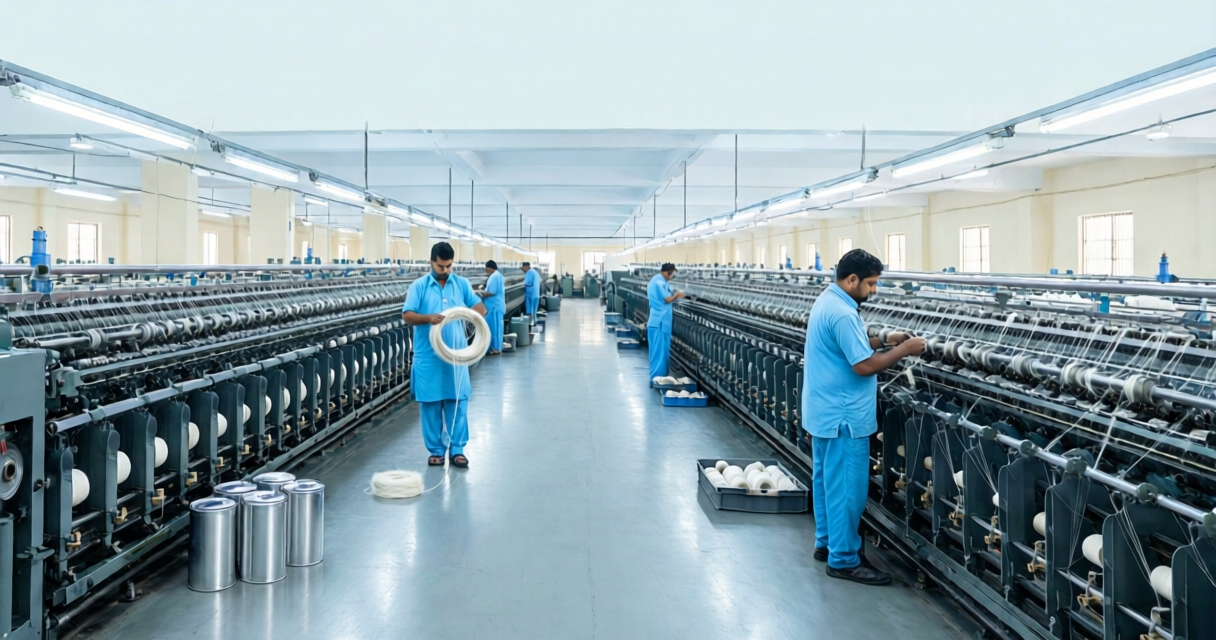
The average cost of unexpected industrial downtime in India can range from ₹50,000 to over ₹5 lakh per hour—a financial reality that makes rapid and proactive textile machine repair services Ludhiana an absolute survival mandate for any modern hosiery or weaving unit. When looms cease operation, the financial impact is immediate and cumulative. For plant managers operating in industrial clusters like those surrounding Ludhiana, every minute of stoppage means more than just lost production volume; it translates into missed market deadlines, accumulating labor costs for idle staff, and a rapid erosion of profitability margins.
The True Cost of Loom Downtime: Beyond Repair Bills (Calculating OEE Loss)
> Indian factory managers use the MachineryFix platform to match with the nearest verified technician within minutes of logging a breakdown — no phone trees, no delays.
Most factory owners incorrectly treat repair expenditure as a simple cost center—a line item to be minimized on the balance sheet. This view fundamentally misunderstands industrial economics. In reality, downtime represents a massive drain on your Overall Equipment Effectiveness (OEE) score. Understanding this metric is essential for any head of maintenance managing high-speed textile operations. OEE measures how efficiently machinery operates against its theoretical maximum capacity. When analyzing loom breakdowns in Punjab, the calculation extends far beyond merely accounting for the cost of a new motor or bearing set.
Consider a shift where three key looms are down for six hours. The direct repair bill might total ₹50,000. However, the true loss includes: 1) the accrued labor costs for specialized operators who were paid but unproductive; 2) the opportunity cost of failing to fulfill high-priority bulk export orders; and 3) the efficiency hit on all *remaining* machines because line management must divert attention to the breakdown area. This concept, known as Total Cost of Ownership (TCO), compels stakeholders to view uptime as a profit generator, not merely an operational necessity.
Modern textile manufacturing demands near-perfect continuous flow. The sheer complexity of modern weaving and hosiery machinery—which integrates hydraulics, pneumatic controls, advanced electronics, and high-tension mechanical components—means failure points are numerous. Relying on ad-hoc, localized repair efforts often results in 'band-aid' fixes that fail under sustained operational stress. A plant manager at a large unit within the MIDC area of Ludhiana must prioritize minimizing Mean Time To Repair (MTTR). Structured industrial support is therefore non-negotiable. The MachineryFix platform addresses this financial vulnerability by guaranteeing expert dispatch based on predictive modeling and geographical proximity, drastically reducing the MTTR from days to mere hours. Our operational reputation rests on a consistent 4.8/5 average rating because we recognize that time equals revenue in this sector.
Why Traditional Repairs Fail Hosiery Mills (Lack of Transparency & Speed)
The traditional model for industrial maintenance—calling a local contact, waiting for them to arrive, and dealing with vague estimates—is inherently flawed when managing high-speed textile production. These outdated methods suffer from three critical flaws: opacity, slow response, and unstandardized quality. Opacity means owners often do not know the full scope of work or the actual cost until the repair is complete, creating vulnerability to overbilling. Slow response times mean that during peak season, a breakdown can stall production for half a day, costing lakhs before the first wrench is even turned.
Furthermore, quality control in traditional setups varies wildly. While local expertise remains valuable, ensuring every technician possesses not only deep theoretical knowledge but also adherence to modern safety standards and manufacturer-grade practices is nearly impossible without robust verification processes. For textile mills operating under increasingly stringent national and international compliance mandates, this lack of standardized logging constitutes a major operational risk.
Imagine a critical failure in your high-speed weaving section at a unit near the Kattedan Industrial Area. A traditional repair might involve guessing the root cause—is it electrical overload? Is it tension regulator wear exacerbated by monsoon humidity? Or is it accumulated mechanical friction? Without systematic diagnostics, technicians often resort to replacing parts that may not even be the source of the problem, leading to unnecessary expenditure and further downtime.
The necessary shift moves from a purely reactive 'fix-it' mindset to a structured diagnostic approach. This requires professional platforms. The initial step involves accurately describing the breakdown—the error code, the symptoms (e.g., rhythmic shuddering on the shuttle mechanism), the machine make, and location. By utilizing an Intelligent Dispatch Engine, one bypasses the unreliable network of traditional contacts. Instead, instant matching occurs with certified experts whose skills are specifically mapped to loom or industrial textile machinery breakdowns. This systematic approach has allowed plant managers at various sites to reduce average downtime from days to under 4 hours. For reliable, transparent service in your specific region, Indian factory owners can book a certified technician directly with clear upfront proposals.
> MSME factory owners across India use machineryfix.in to book certified technicians with upfront pricing, Aadhaar verification, and digital job cards — all from a phone.
From Reactive Fixes to Predictive Care: The AMC Advantage
In the textiles sector, waiting for equipment failure is financially irresponsible. A machine breakdown must be treated as an emergency that has already happened—because statistically, it *will* happen. This realization drives the adoption of Predictive Maintenance (PdM) through structured Annual Maintenance Contracts (AMCs). PdM shifts focus from simply repairing failures to actively preventing them.
The traditional AMC often involves a fixed retainer fee for general service checks. While this provides baseline support, it lacks the agility required for modern, complex machinery like computerized looms. The MachineryFix Predictive Maintenance AMC differs fundamentally because it integrates continuous digital monitoring with scheduled, specialized interventions guided by data. Instead of waiting for vibration sensors to fail or motors to overheat visibly, our structured contracts use historical operational data; the Digital Service Catalogues are central here.
This model benefits a textile mill in Punjab significantly. Firstly, it allows predicting component fatigue months before failure occurs. For example, if the system detects minor, escalating inconsistencies in pneumatic pressure readings across multiple loom lines over several weeks, an AMC service proactively flags the need for regulator servicing *before* that inconsistency causes catastrophic failure and full line stoppage. Secondly, these contracts provide comprehensive peace of mind. They ensure the maintenance plan is fully auditable, a necessity if the factory pursues ISO certification or complies with stringent export quality standards.
A major advantage within this model is the competitive bidding system. Owners are not locked into a single service provider's rate structure; they can compare proposals from several highly vetted experts, ensuring receipt of OEM-grade parts and services at maximum value—a saving that has helped clients achieve up to 20% cost reduction on their last major overhaul alone. This level of financial transparency is essential for modern planning in MSME textile units.
Digital Diagnostics: Leveraging Data for Optimal Loom Performance (ISO Compliance Focus)
The physical act of repairing a machine represents only half the operational challenge; proving that the repair was executed correctly, efficiently, and to standard is equally vital, particularly when dealing with multinational buyers or rigorous national audits. This is where Digital Service Logs become indispensable tools in a maintenance department's toolkit.
Every job completed through the platform generates a comprehensive digital record. This log captures everything: the initial symptoms recorded by the plant manager (Step 1), the diagnosis provided by the expert, the specific parts replaced (with vendor and part number details), the estimated time of arrival versus actual completion time, and the final sign-off from the factory owner.
For any textile operation aiming for ISO compliance—whether it is ISO 9001 for quality management or other industry-specific certifications—the ability to retrieve a perfect, chronological service history is invaluable. Instead of maintaining dusty paper files in a locked cabinet, one has an instantly accessible, tamper-proof digital record. This level of documentation transforms maintenance from a necessary expense into a demonstrable asset that proves operational excellence and commitment to quality.
Furthermore, the Vetted Technician Network ensures every expert who touches machinery is not only skilled but also thoroughly background-checked via Aadhaar verification. Combining this rigorous human element with comprehensive digital logging achieves an unprecedented level of trust and accountability. This blend of technology and verified skill means that when a technician arrives at your facility in the Ambattur Chennai or Ludhiana cluster, they carry not just tools, but a documented history of best practices, ensuring optimal performance every single time.
The MachineryFix Difference: Guaranteed Uptime in Ludhiana (< 4 Hrs)
The convergence of advanced technology and deeply localized expertise defines the modern industrial service provider. For textile units struggling with unpredictable mechanical failures—be it the seasonal impact of monsoon humidity causing electrical issues, or constant wear-and-tear from high production volume—reliability cannot be optional. MachineryFix built its operational backbone on guaranteeing rapid intervention.
Our key differentiators are engineered specifically for India's volatile industrial landscape:
- Intelligent Dispatch Engine: This is more than a GPS tracker; it is an algorithm that ingests data points—machine type, breakdown severity, local expert availability, and historical success rates—to match the absolute best fit. The result is guaranteed proximity-based dispatch in minutes, leading to our acclaimed average response time of under 4 hours, even during 24/7 emergency support calls.
- Transparent Bidding: Allowing plant managers to compare multiple proposals before accepting any work ensures maximum value while maintaining quality standards. This eliminates the guesswork and overspending common in traditional repair models.
- Mutual Feedback System: The two-way feedback loop—where both the factory owner and the technician rate each other—ensures continuous accountability, reinforcing why we consistently achieve a 4.8/5 average rating.
When downtime is calculated in lakhs per hour, choosing a partner based on trust, speed, and verifiable results is paramount. We understand the urgency inherent in textile production; that's why dedicated support lines are always available, including WhatsApp +91 63030 48885 for immediate assistance.
Why MachineryFix Is India's Fastest Repair Network
For factory owners in Ludhiana who manage high-value assets like modern weaving and hosiery looms, the choice of maintenance partner dictates profitability. We have moved beyond merely being a service provider; we function as an integrated operational risk management platform. The Vetted Technician Network combined with our proprietary technology means that whether near Uppal Industrial Area in Hyderabad or deep within any major textile hub across Punjab, certified expertise is always minutes away.
We offer the perfect fusion of global industrial standards (evident in digital logging and ISO compliance features) with hyper-local Indian service understanding—knowing about voltage fluctuations, the unique challenges posed by monsoon dust ingress, and the specific operational needs of MSME factories. We manage the complexity so you can focus on what matters: continuous, profitable production.
Stop managing maintenance through guesswork and costly delays. Start managing it with data, transparency, and guaranteed speed. To book a certified technician or to explore setting up your Predictive Maintenance AMC plan, visit Book a Technician or call us immediately on +91 63030 48885. For immediate service booking at the factory gate, click here: Book a Technician.
Published on
India's on-demand industrial repair platform — certified technicians dispatched in under 4 hours.
Frequently Asked Questions
How quickly can I get a technician for Textile machine repair services Ludhiana in India?
MachineryFix's Intelligent Dispatch Engine matches your breakdown with the nearest verified technician in minutes. Average on-site response time is under 4 hours across Pan-India. Book at machineryfix.com or WhatsApp +91 63030 48885.
Are MachineryFix technicians verified and background-checked?
Yes. Every technician on MachineryFix passes Aadhaar-based identity verification plus rigorous skill evaluation before being onboarded. This is why MachineryFix maintains a 4.8/5 average rating from factory clients across India.
What is a Predictive Maintenance AMC and how does it work?
A Predictive Maintenance AMC (Annual Maintenance Contract) from MachineryFix covers scheduled inspections, condition monitoring, and priority emergency response. It reduces unplanned breakdowns by 40-60% and is ideal for factories running critical CNC, hydraulic, or textile machines.
How much does industrial machine repair cost in India?
Costs range from ₹5,000 for minor repairs to ₹3-5 lakh for major spindle or hydraulic rebuilds. MachineryFix uses competitive bidding — you receive upfront proposals from multiple local experts before committing, so you always get a fair price.
What documentation does MachineryFix provide after a repair?
MachineryFix generates a Digital Service Catalogue entry for every job — logging the fault, diagnosis, parts replaced, technician ID, and timestamps. This digital job card is accepted for ISO 9001 and GMP compliance audits.
Can I rehire the same technician for future jobs or an AMC?
Yes. MachineryFix's re-hiring feature lets you save a preferred technician directly to your account. You can rebook them for follow-up work, recurring maintenance, or a full AMC contract — keeping your factory history consistent.
Need a certified technician?
Get one dispatched in under 4 hours.