Hydraulic Press Maintenance Gujarat: PdM vs PM Strategy
Don't let unexpected hydraulic failures halt your production line for days. Implement a hybrid PdM/PM strategy and restore operations in under 4 hours with MachineryFix.

MachineryFix Team
Industrial Repair & Maintenance Experts · 10 July 2026
Need this fixed?
Certified technicians, dispatched from our Hyderabad hub.
The true cost of industrial downtime in India is staggering: a single day of stoppage at a medium-sized MSME factory can translate to losses ranging from ₹25 lakhs to over ₹50 lakhs. This immense financial pressure makes robust strategies for industrial machine breakdown prevention India an absolute operational imperative. For factory leaders overseeing heavy equipment like hydraulic presses, the unexpected failure of even one key actuator or burst cylinder line doesn't just halt production; it threatens profitability and stability across entire industrial clusters, from Ambattur in Chennai to Kattedan in Bengaluru. Moving beyond reactive repairs toward proactive, reliable machinery management is no longer optional—it defines competitive survival in today’s volatile Indian market.
The True Cost of Downtime: Why Generic PM Schedules Fail Indian MSMEs
In heavy manufacturing sectors like metal fabrication and automotive component assembly, time translates directly to capital. Many factories still rely on traditional Preventive Maintenance (PM) schedules—changing oil every X hours or replacing filters every Y months. While these routines appear comprehensive, generic, calendar-based PM approaches are fundamentally flawed when applied to the harsh variables of Indian industrial environments. They operate under an assumption that failure follows a predictable timeline, ignoring real-world stressors such as sudden voltage fluctuations, excessive monsoon humidity affecting servo drives, abrasive dust ingress common in Ludhiana clusters, or localized component stress from overloaded cycles.
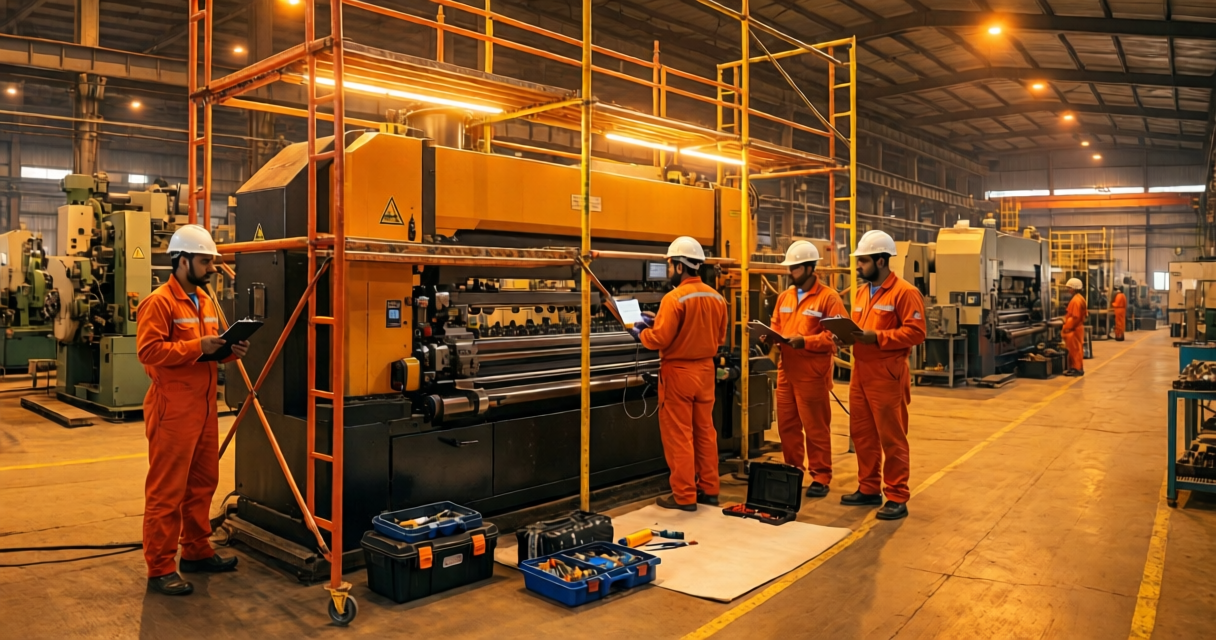
A factory owner might diligently follow a PM schedule for hydraulic presses, changing the fluid and inspecting seals on time. However, if an operator pushes the machine beyond its rated capacity due to an urgent order, or if ambient temperature spikes unexpectedly, that meticulously timed maintenance fails to predict resulting metal fatigue in the main ram cylinder. The failure stems not from neglect; it arises from systemic blind spots inherent in PM theory when confronted with operational stress. Furthermore, depending on local, non-vetted repair shops for emergency fixes compromises quality and prolongs downtime because no standardized process exists for diagnosing root causes or sourcing OEM-grade parts rapidly.
The solution requires a mandatory shift from time-based scheduling to condition-based monitoring. Relying solely on generalized PM checklists means managing symptoms, not the underlying risk. Industry must integrate technology that predicts *when* failure is imminent, rather than merely dictating *when* inspection should occur. This transition demands sophisticated data analysis and a service network capable of responding with surgical precision. The MachineryFix platform was developed precisely to bridge this critical gap—providing immediate access to specialized expertise whether the planned PM routine fails or an unforeseen breakdown strikes.
Predictive Maintenance (PdM): Using Data to Stop Failure Before It Starts
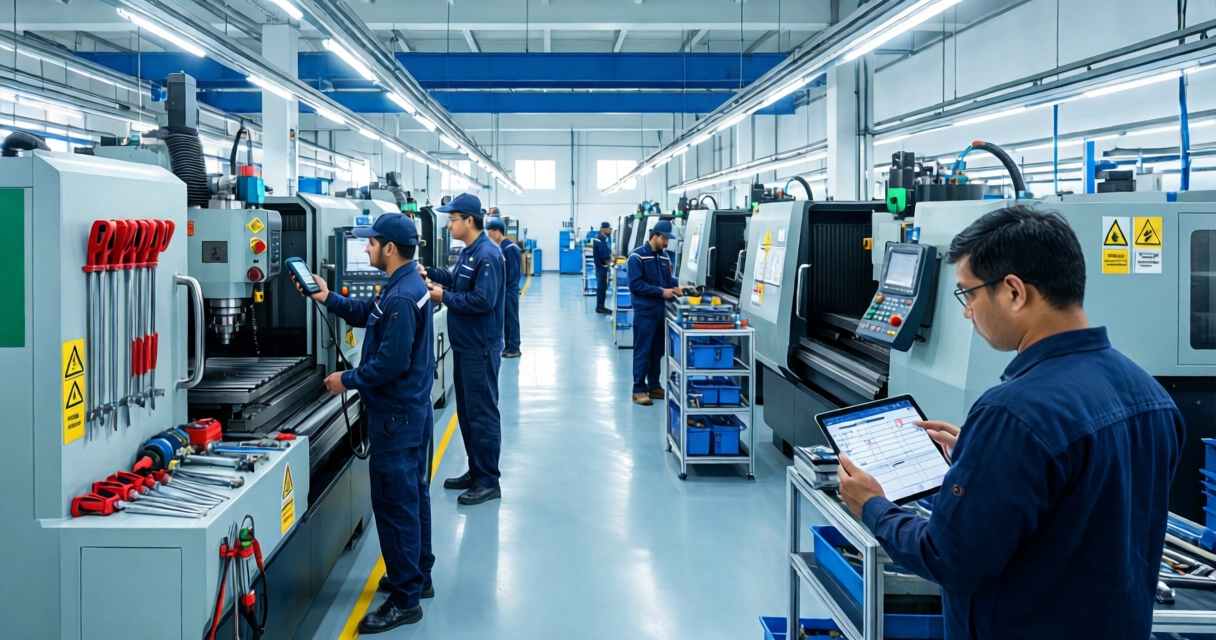
Predictive Maintenance (PdM) represents the gold standard for industrial machine breakdown prevention India. Unlike PM, which relies on calendar time, PdM uses advanced sensors and sophisticated data analytics to monitor the actual health status of critical components in real-time. Instead of asking, "When should we change this pump?" PdM asks, "Is this pump currently operating within acceptable parameters, or are its bearings showing early signs of degradation?"
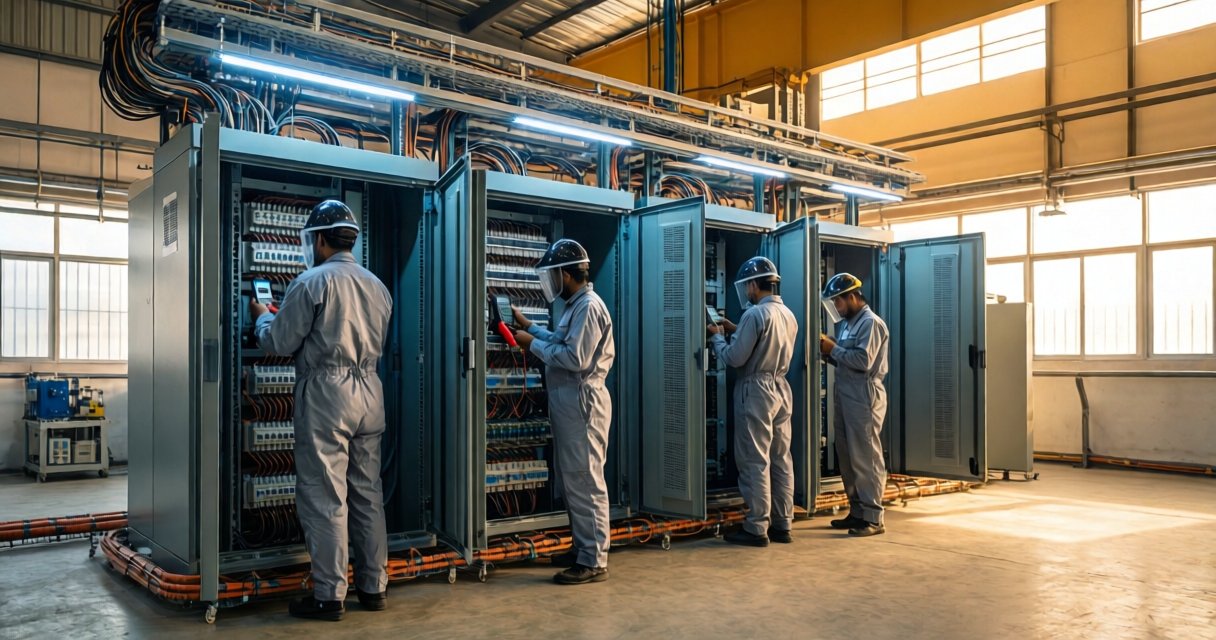
PdM methods encompass diverse, highly technical disciplines. Vibration analysis measures subtle changes in the frequency and amplitude of movement that precede bearing failure or misalignment—a signal entirely missed by a routine visual inspection. Fluid particle counting tracks contamination levels in hydraulic oil, allowing technicians to detect microscopic wear metals (like iron, copper, or aluminum) long before those particles clog a filter or cause catastrophic system failure. Thermal imaging identifies hotspots on electrical cabinets or motor mounts, alerting staff to resistance buildup that could lead to an arc fault, particularly critical given localized 3-phase power quality issues in many Tier-2 Indian cities.
Implementing PdM successfully demands more than just acquiring sensors; it requires expert interpretation and rapid action when anomalies flag. A sophisticated analysis might predict the main hydraulic pump in a CNC lathe will fail within three weeks due to bearing degradation exceeding seventy percent of baseline vibration levels. This prediction allows the factory manager to plan for replacement parts, schedule downtime during a planned lull (not an emergency stop), and order specialized expertise. To bridge this gap from detection to repair, MachineryFix offers Predictive Maintenance AMC contracts that integrate diagnostics with rapid response capabilities. These structured annual agreements ensure that when data screams "failure imminent," certified personnel are ready within hours, maximizing uptime and minimizing operational risk across the facility.
> MSME factory owners across India use machineryfix.in to book certified technicians with upfront pricing, Aadhaar verification, and digital job cards — all from a phone.
Preventive Maintenance (PM) Redefined: Optimal Timing and Critical Components
Modern PM remains a vital component of total machinery upkeep, but it must be redefined to become smarter, more targeted, and less resource-intensive. The goal of modern PM is not simply "maintenance for maintenance's sake"; it focuses on *optimal intervention*. This means shifting focus from replacing components based on arbitrary service intervals (e.g., every six months) to inspecting and servicing them based on actual usage metrics (e.g., hours run, cycles completed, or fluid contamination load).
For heavy machinery like hydraulic presses and conveyor systems, the most critical PM elements are often overlooked: seals, filters, and pumps. Seals degrade not just from age but from chemical incompatibility with the operating fluid, rapid temperature cycling, or debris ingress—a common issue in dusty industrial zones. Filters clog due to a combination of particulates and viscosity breakdown. Similarly, pumps can fail prematurely if the hydraulic fluid becomes contaminated by external sources.
A redefined PM strategy necessitates meticulous documentation and historical data logging. This is where Digital Service Catalogues prove invaluable. By maintaining a digital record of every part replaced, every diagnostic test run, and every component inspected (complete with timestamps and technician notes), a plant manager gains an unprecedented level of control. They can cross-reference failure points across different machines in their facility, identifying patterns that traditional PM schedules would miss entirely. Furthermore, having this comprehensive digital log is perfect for compliance audits, providing indisputable proof of due diligence—a significant advantage noted by many factory leaders during ISO certifications.
The Hybrid Approach: Combining Digital Monitoring with Verified Service Response
The most resilient and cost-effective maintenance strategy in the 21st-century industrial landscape fuses continuous data streams (PdM) with timely, expert human intervention (PM/Reactive Repair). This robust Hybrid Approach model effectively merges constant machine health monitoring with guaranteed service availability. The ideal scenario sees machine health monitored constantly. When the system detects an anomaly—say, a gradual drop in hydraulic pressure or increased bearing vibration on a CNC lathe—it triggers an alert.
This alert immediately transforms the operational challenge from a theoretical data point into an actionable service request. A breakdown prevention strategy must therefore include guaranteed access to verified human capital and genuine parts. A factory cannot wait days for a specialized hydraulic expert; downtime costs are prohibitively high. The Hybrid Approach demands immediate, localized action.
The MachineryFix model excels at executing this transition flawlessly. If the PdM system predicts failure in a component next week, or if an unexpected breakdown happens tonight (emergency support is available via +91 63030 48885), the process remains streamlined: - Diagnosis: The initial symptom (symptoms, error codes) is logged into the platform. - Matching: Instead of calling a general service line, the system uses the Intelligent Dispatch Engine to instantly match that specific failure profile with the nearest available certified expert in your region, whether it’s Coimbatore or Rajkot. - Execution: The expert arrives equipped not just with skill, but with knowledge derived from the machine's full repair history stored digitally.
This integrated capability means operations run on a continuous loop: Monitor -> Predict -> Plan -> Execute Repair. This cycle guarantees that when best practice PdM identifies a problem, the practical solution is immediate and reliable. The Vetted Technician Network, which undergoes rigorous skill evaluations and Aadhaar checks, ensures that hands-on repair quality matches the sophistication of the diagnostic data.
MachineryFix Advantage: Integrating Predictive Data into < 4 Hr Emergency Repair Cycle
While PdM gives foresight to plan for failure, nothing prepares a factory manager for an unexpected catastrophic event—a sudden burst line or motor seizure at 2 AM. This is where the core differentiators of MachineryFix transition from beneficial features to absolute operational necessities. The platform functions as a complete industrial risk mitigation system designed specifically for the volatile nature of Indian MSME manufacturing.
The single most powerful guarantee offered in this high-stakes environment is speed, coupled with quality assurance. When predictive monitoring suggests an issue requiring immediate attention, or when unplanned failure strikes, our process ensures minimal delay. We guarantee response times under four hours across Pan-India industrial zones. This rapid deployment capability relies on several mechanisms:
- Intelligent Dispatch Engine: The algorithm finds the *optimal* certified expert based on proximity, machine specialization (e.g., specific hydraulic press models), and current availability—all in minutes.
- Competitive Bidding: Before accepting any repair proposal, users benefit from competitive bidding among multiple vetted experts, ensuring cost efficiency that can save a factory up to 20% compared to single-source emergency repairs.
- Verified Quality: Every technician belongs to a rigorously checked Vetted Technician Network (Aadhaar + skill evaluations), and the average rating stands at 4.8/5. This ensures expertise matches the severity of the breakdown, providing peace of mind generic service calls cannot match.
We understand that industrial trust is earned through demonstrable results. We do not merely promise fast repairs; we provide tangible proof: a plant manager in Kattedan reduced average downtime from days to under four hours after integrating our service model. By combining the foresight of PdM with the unmatched speed and accountability of our on-demand platform, MachineryFix transforms unpredictable risk into managed operational expense.
Why MachineryFix Is India's Fastest Repair Network
For factory owners in Hyderabad’s Uppal Industrial Area, or manufacturers operating in Ambattur Chennai, uptime is the primary metric of success. The gap between diagnosing a problem (via PdM data) and having it physically fixed used to be filled by uncertainty, delays, and quality compromises. MachineryFix Technologies Pvt Ltd has systematically eliminated this critical time variable.
The entire ecosystem—from initial symptom description via the app to final sign-off on the digital job card—is engineered for maximum velocity and transparency. The platform provides comprehensive peace of mind through features like keeping all communication within a private space, ensuring data integrity and privacy protection. Whether booking a full Predictive Maintenance AMC contract or needing urgent hydraulic press repair in Gujarat, our process is standardized:
1. Describe problem (symptoms, error codes). 2. Get matched instantly (proximity-based, compare bids & ETAs). 3. Technician arrives (live status, identity verified at factory gate). 4. Back up & running (OEM-grade parts, digital job card, approve & pay).
The result is a reliable, data-backed partnership that guarantees performance when machinery needs it most. Do not manage failure with hope; prevent it with verifiable data and rapid deployment. Take control of your operational timeline today by visiting machineryfix.com or calling us for emergency support at +91 63030 48885, and book a certified technician directly via Book a Technician.
Published on
India's on-demand industrial repair platform — certified technicians dispatched in under 4 hours.
Frequently Asked Questions
How quickly can I get a technician for industrial machine breakdown prevention India in India?
MachineryFix's Intelligent Dispatch Engine matches your breakdown with the nearest verified technician in minutes. Average on-site response time is under 4 hours across Pan-India. Book at machineryfix.com or WhatsApp +91 63030 48885.
Are MachineryFix technicians verified and background-checked?
Yes. Every technician on MachineryFix passes Aadhaar-based identity verification plus rigorous skill evaluation before being onboarded. This is why MachineryFix maintains a 4.8/5 average rating from factory clients across India.
What is a Predictive Maintenance AMC and how does it work?
A Predictive Maintenance AMC (Annual Maintenance Contract) from MachineryFix covers scheduled inspections, condition monitoring, and priority emergency response. It reduces unplanned breakdowns by 40-60% and is ideal for factories running critical CNC, hydraulic, or textile machines.
How much does industrial machine repair cost in India?
Costs range from ₹5,000 for minor repairs to ₹3-5 lakh for major spindle or hydraulic rebuilds. MachineryFix uses competitive bidding — you receive upfront proposals from multiple local experts before committing, so you always get a fair price.
What documentation does MachineryFix provide after a repair?
MachineryFix generates a Digital Service Catalogue entry for every job — logging the fault, diagnosis, parts replaced, technician ID, and timestamps. This digital job card is accepted for ISO 9001 and GMP compliance audits.
Can I rehire the same technician for future jobs or an AMC?
Yes. MachineryFix's re-hiring feature lets you save a preferred technician directly to your account. You can rebook them for follow-up work, recurring maintenance, or a full AMC contract — keeping your factory history consistent.
Need a certified technician?
Get one dispatched in under 4 hours.